194
Countries
View child rights risk data from countries around the world
The world’s youth face a growing number of challenges today — from staying safe online to navigating the impacts of climate change.
But when companies use their influence and resources to protect children’s rights and respond to the risks most relevant to the countries where they operate, those challenges can become opportunities for lasting positive impact.
To take meaningful action, companies and investors need reliable, actionable data.
How can they gain the insights needed to strengthen decision-making and drive responsible business practices?
The Children’s Rights and Business Atlas is a geographical risk tool that helps global companies and investors identify, assess, and mitigate child rights risks through country-by-country analysis and a data-driven due diligence approach which is grounded in a local context.
194
Countries
View child rights risk data from countries around the world
3
Risk Indexes
Risks are organised across Workplace, Marketplace, and Community and Environment
11
Risk Issues
The tool covers child labour, product safety, online safety, and more
ACCESS THE CHILDREN’S RIGHTS AND BUSINESS ATLAS NOW
A brief guide to our geographical risk tool
Accessibility note
Launch webinar
In our launch webinar, Global Child Forum introduces the Children’s Rights and Business Atlas and the drivers behind its numbers, and experts from Orkla ASA and The Centre for Child Rights and Business share their perspectives on how the data supports enhanced due diligence and prioritised risk mitigation.
To the recordingThe Children’s Rights and Business Atlas classifies risk by checking 11 issues against 173 indicators.
These risk issues are broadly divided into 3 indexes — Workplace, Marketplace and Community and Environment — here’s what they cover:
The above indexes are also applied in Global Child Forum’s annual benchmark study. Moreover, for this analysis we incorporate a fourth index, assessing companies on Governance and Collaboration.
Together, the Children’s Rights and Business Atlas and the benchmark help companies understand not only how they are performing, but where child rights risks may be most urgent across their markets, operations and value chains.
Join the Impact Network
The Children’s Rights and Business Atlas identifies where child rights risks are greatest through country-level data and analysis. Companies aiming to turn those insights into action can join our Impact Network, a community of forward-thinking professionals, dedicated to strengthening business resilience by better integrating children’s rights throughout the value chain.Member companies access exclusive tools, events, and peer learning sessions, to improve internal knowledge, boost brand reputation, and achieve reporting excellence.
Find out more




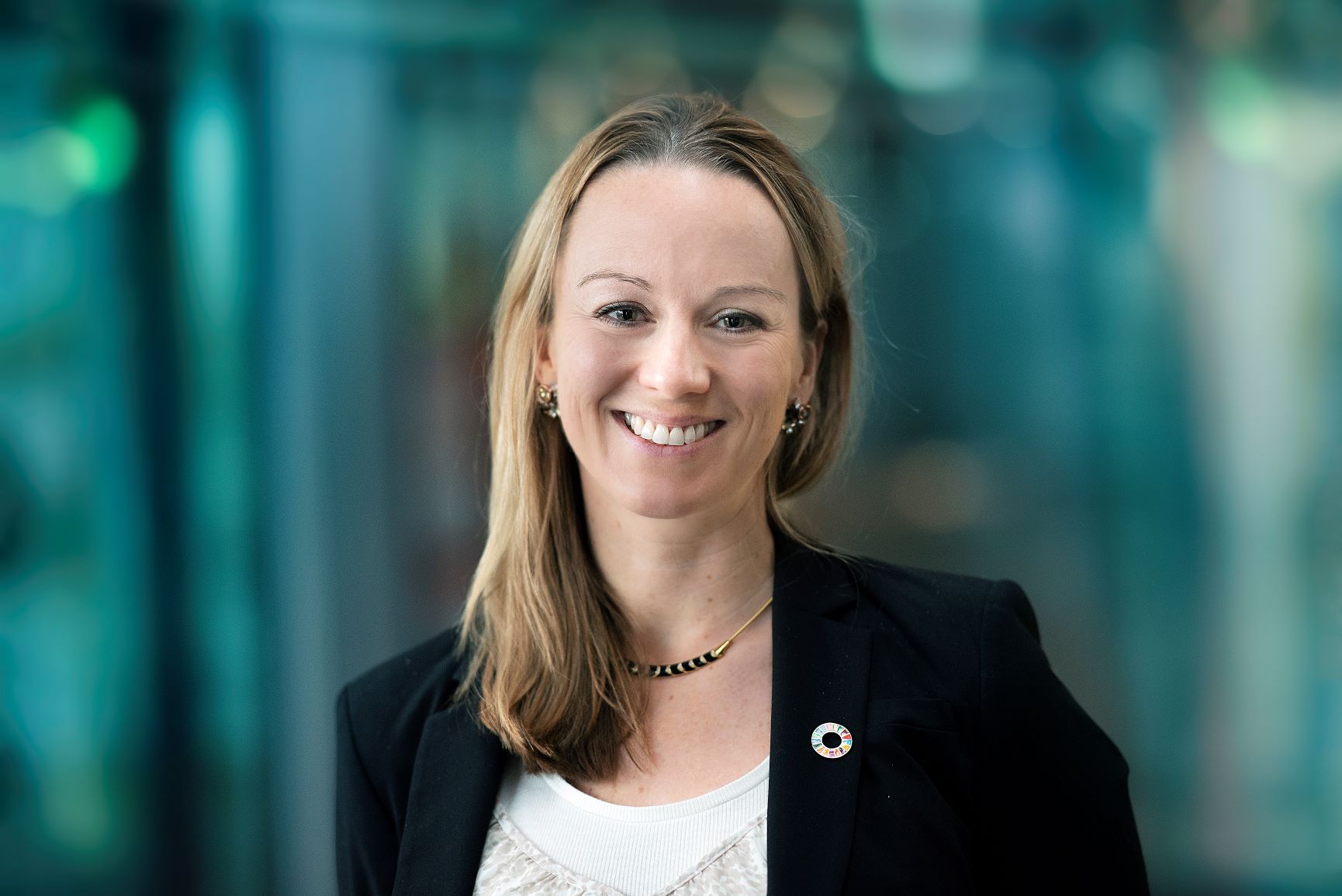
Anita Househam
Vice President Social Responsibility, Orkla ASA
To support procurement and product development
The Children’s Rights and Business Atlas provides a detailed and intuitive way to assess risks across sourcing markets, which can support the integration of due diligence in everyday decision-making.

Molly Haragan
Director, Responsible Sourcing at The Hershey Company
For responsible business practices
Understanding risks across complex value chains is critical for responsible business practices. The Children’s Rights and Business Atlas gives us the ability to consolidate data from multiple countries and strengthen our due diligence efforts.

Marco Beghini
Global Sustainability Director, Barilla Group
For a more robust supply chain
Strong due diligence processes require transparency and reliable data. The Children’s Rights and Business Atlas supports our ability to gather insights across countries and improve how we identify, assess, and address risks in the supply chain.
Senior Manager Corporate Partnerships and Growth
Read more
Invest Responsibly
Every year, we undertake a world-class benchmark of the most influential global companies to analyse their approach to children’s rights.
As part of this, we offer specially collated datasets to the financial industry to help identify, mitigate, and manage child rights risks within their portfolios.
For the Children’s Rights and Business Atlas, Global Child Forum has partnered with KidsRights Foundation to use the KidsRights Index data, in addition to the other data sources listed within the tool.
This data and its underlying methodology are the intellectual property of Global Child Forum. Any distribution, reproduction, or commercial use is prohibited without prior written permission from Global Child Forum.