Decent Work
“Pay our parents adequately so that children do not have to drop out of school.”
This statement by 13-year old boy from India frames the issue of decent work and its impact on children.
According to the Children’s Rights and Business Principle #3:
“All business should provide decent work for young workers, parents and caregivers.“
The corporate responsibility to protect includes providing decent work for young workers, being responsive to the vulnerability of young workers above the minimum age for work, and providing decent working conditions that support workers – both women and men – in their roles as parents or caregivers.
Read more about the CRBP #3.
 Vodafone: Demonstrating an end-to-end commitment to children’s rights
Vodafone is working actively to strengthen children’s rights across its business - find out how in our case study!
 Samsung: Supporting working parents and caregivers through strong family-friendly policies
Samsung has implemented a range of family-friendly policies promoting employee wellbeing and work-life balance, to support children’s rights.
 Global Benchmark Report - The State of Children’s Rights and Business 2021
Are companies prioritizing children’s rights among all the other issues on the sustainability agenda? Learn more from our Global Benchmark - The State of Children's Rights and Business 2021
 The State of Children's Rights and Business in Southeast Asia 2020
The State of Children's Rights and Business in Southeast Asia 2020
 A Watershed Moment for Business: The effects of COVID-19 young people
Of all the heartbreaking effects of COVID-19, its impact on young people could prove to be one of its most damaging legacies. In fact, the coronavirus crisis risks turning back the clock on years of progress made on children’s well-being and has put children’s rights under serious pressure across the globe. Linda Lodding, Head of Communications at Global Child Forum, takes a closer look at these pressure points.


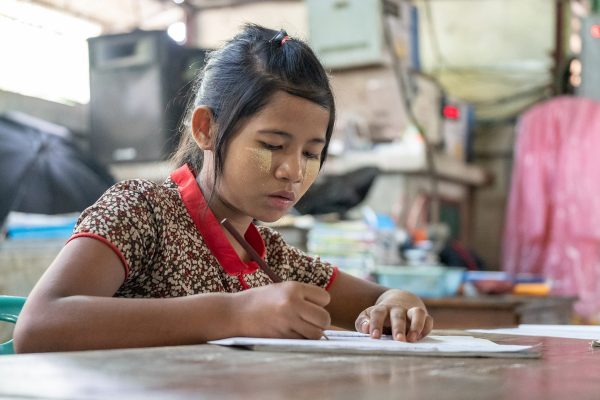 Children’s Voices - Myanmar story
Take a look at the story of Warwar Nwe, who was just ten years-old when she had to drop out of school.
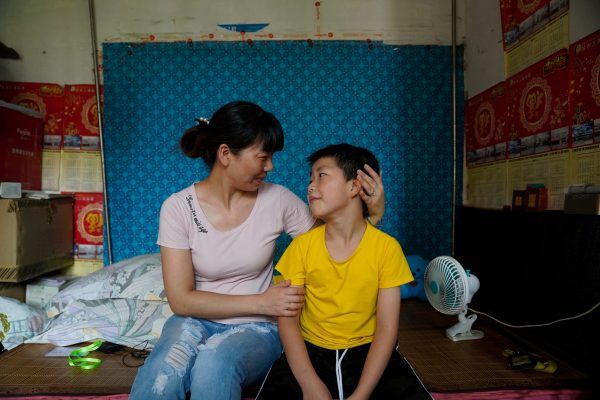 Children’s Voices - China story
Watch the story of Rongxuan, whose mother left him behind with his grandparents so that she could return to work in Dongguan, China.
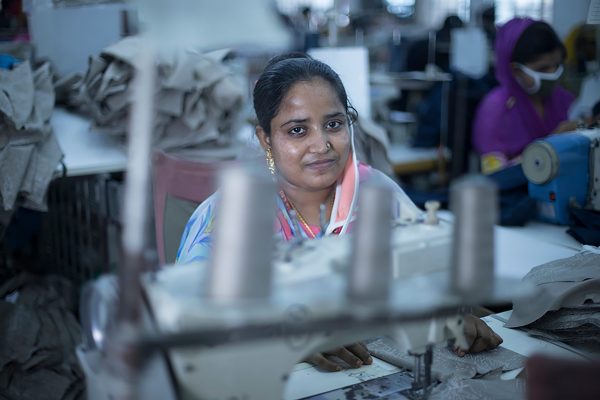 Children’s Voices - Bangladesh story
Take a look at this film about Nadiya, and her mother Nasima Begum, who is a garment worker in Dhaka, Bangladesh.
 Norsk Hydro Brazil’s journey towards social responsibility
This case study on Norsk Hydro Brazil and social responsibility shows how the company addresses children’s rights and related issues in its operations.
 Improving family life: How Chinese factories help workers, their children and their business
“My husband and I came out to work for our children but we couldn’t take them with us. We don’t have the time to take care of them or to cook for them…so we left them with their grandparents,” said Liu Jing*, a factory worker whose three children live with their grandparents in a village in Hunan, China. She is part of the “247 million” – the number of people who have migrated for work in China. She has been a factory worker for the past ten years, and like many in her situation, only returns home a handful of times throughout the year to see her children. If her situation can be represented by a number, so can her children’s. They belong to the “61 million”, the estimated number of children in China who grow up without one or both parents present. Behind these numbers however, are stories far more intricate, stories that have implications not only for society but for businesses as well.

 Father's Days:
 Supporting working parents in Latin America and the Caribbean
Some medium-sized enterprises in Latin America and the Caribbean are putting in place paternity packages that give their working fathers time to invest in their children. Marcelo Ber, Regional Child Rights and Business Focal Point for UNICEF Latin America, talks to new father, Rodrigo, on why spending time with his baby daughter is a valued employee benefit - for the short-term and long-term.
 SCA: Recognising Children as Stakeholders
This case study details how SCA is recognising children as stakeholders and ensuring their rights are integrated into daily operations.
Dongguan Concord Pottery makes ceramic cups and other items for a leading coffee shop brand. They employ around 3,000 people at their factory in Southern China. The company has worked with Save the Children’s centre for child rights since 2013 in order to improve the situation for their workers who are also parents. The partnership has meant quick and tangible improvements, not only for employees and their children, but increased staff retention and lower costs for the factory itself. Lake Law is the head of corporate social responsibility for Dongguan Concord Pottery. Children’s rights and business videos
 Toolkit Juara Child-Friendly Business: A guidance for business (hotel and restaurant) integrating children’s rights
Together with the Indonesian Hotel and Restaurant Association (PHRI) in West Java, Save the Children has been integrating a child-centred corporate social responsibility project in the hospitality sector of Indonesia. The project worked to encourage members to integrate children’s rights into their member’s business operations and strategies. One result of the project was the creation of this toolkit, which included the assistance of academics, several NGOs, and input from child and youth participants. It consists of four tools for children’s rights integration and eight tools that inspire hotels and restaurants in responding to issues and problems that most frequently arise and impact children’s rights.
Children’s rights are an essential investment in a sustainable future. Safeguarding these rights helps build the strong, well-educated communities that are vital to creating stable, inclusive and productive societies. The private sector impacts children’s lives both directly and indirectly, and all companies in all industries – global, regional or local – can make a difference. Business activity influences the daily life of children in a number of ways, from impoverished communities where children are held back from getting an education because they need to support the family with their income, to the marketplace where children react to marketing messages and learn about the world via the many products surrounding them. Companies that want to take part in the movement pushing sustainable development forward, creating the world that we together have formulated in the Sustainable Development Goals and Agenda 2030, need to safeguard, empower and consider the opinions of those we should be creating that world together with. Considering children’s rights holds the possibility of enriching your business and easing your way into the challenges of the future. Read these statements from companies and businesses that have incorporated a child rights approach into their work.
Principle 3 of the Children’s Rights and Business Principles (CRBPs) indicates that all businesses should provide decent work for young workers, parents and caregivers. This webinar will explore how companies can commit to supporting children’s rights by paying particular attention to the rights of young workers – who are above the minimum age of employment – as well as parents and caregivers. The discussion will look at what kind of support companies can provide to implement Principle 3, including provisions of safe working conditions for young workers, paid leave, breastfeeding and child care facilities, agile working hours, and the benefits of providing such support. The webinar will also include specific examples from business.
This Guide is written for civil society organizations that use or wish to use the Children’s Rights and Business Principles to engage with businesses in monitoring, enforcing and advancing children’s rights. To give a broad perspective on the ways that civil society might seek to work with companies, organizations’ diverse missions, goals and methods of working are taken into account. As a result, this Guide can be used by a wide range of civil society actors in considering, developing and reviewing their approaches to and relationships with business entities. Advocacy is a central focus, with the primary goal being to hold businesses accountable for their impacts on children’s rights. The Guide is divided into Five Parts Part I introduces the Guide and establishes the international relevance of the Children’s Rights and Business Principles. Part II explains the corporate duty to respect and commitment to support children’s rights in theory and in practice. Part III explores each of the nine substantive Children’s Rights & Business Principles in detail. Part IV addresses ways that additional stakeholders including government, the media, consumers and children can enhance cooperation between business and civil society in matters of children’s rights. Part V offers conclusions and a selection of resources for further research.
This publication presents UNICEF’s stance and approach to child labour. While upholding the Convention on the Rights of the Child, UNICEF and its partners work to strengthen legal and policy frameworks, enhance government and community-based structures and services, and engage with communities to promote positive social change. To achieve positive results, promoting understanding through research of the underlying causes of child labour and addressing their interconnectedness is key to UNICEF’s approach to response and prevention.
 Children’s Rights in Impact Assessments: A guide for integrating children’s rights into impact assessments and taking action for children
This publication is designed to guide companies in assessing their policies and processes to both prevent harm and actively safeguard children’s best interests. As a tool, this should be used as part of ongoing assessments of human rights impacts as outlined in the United Nations Guiding Principles on Business and Human Rights. This publication has 58 primary criteria for addressing company policies and practices relevant to children’s rights. A company is taking an important step towards recognizing children as rights holders and stake holders by integrating children’s rights considerations into their ongoing impact assessments.