Marketing and Product Safety
Children and youth comprise a large consumer group – and business has a great opportunity to positively impact children’s wellbeing and development through their products, services and targeted marketing activities.
At the same time, due to their vulnerability, inexperience and lack of ability to critically reflect on the received information, business should be especially diligent in protecting young consumers from harmful, potentially deceptive and offensive information.
The Children’s Rights and Business Principle #6 states that:
“All business should ensure that products and services are safe, and seek to support children’s rights through them.”
Find out more below.
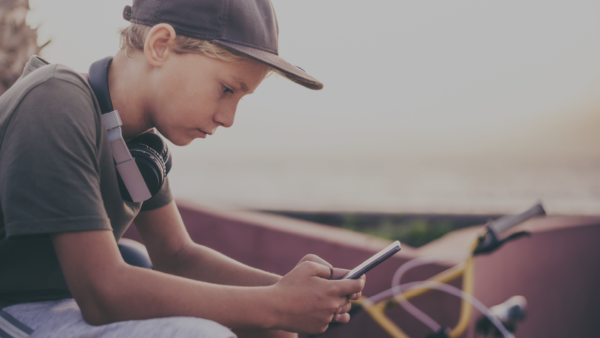 Listen Up! Report: What Teenagers Want Tech to Hear
In the report, ListenUp: What Teenagers Want Tech to Hear, teens share their experiences of the negative and beneficial impacts of digital platforms on their lives.
 Company Initiative: ListenUp! Advancing Digital Wellbeing for Children and Youth
Global Child Forum, alongside leading telecom operators and technology companies, is undertaking a company initiative to advance youth digital wellbeing.
 Education is Everyone’s Business
As the world moves forward from the challenges posed by the pandemic, there is a renewed focus on building back better—and education is at the heart of this effort.
 From Clicks to Progress: Harnessing Youth Voices for Sustainable Development
As digital transformation reshapes every facet of our lives, businesses must acknowledge a crucial reality: children and adolescents are not just future consumers—they are powerful influencers, stakeholders and innovative problem-solvers.
 Championing Children’s Rights: Ethical Marketing for Olympic Sponsors
Global Child Forum calls on Olympic Sponsors and companies to help create a world where children can thrive.
 Beyond Warning Labels: U.S Surgeon General’s Social Media Alert is Promising, But Falls Short
Global Child Forum supports the U.S Surgeon General’s call for warning labels on social media platforms, but urges companies to take action.
 Microsoft: Technology to respect and promote child rights in the age of COVID-19
Read about how global technology company Microsoft seeks to support children’s access to education and information while ensuring their safety online.
 Vodafone: Demonstrating an end-to-end commitment to children’s rights
Vodafone is working actively to strengthen children’s rights across its business - find out how in our case study!
 Global Benchmark Report - The State of Children’s Rights and Business 2021
Are companies prioritizing children’s rights among all the other issues on the sustainability agenda? Learn more from our Global Benchmark - The State of Children's Rights and Business 2021
This playbook provides starting points for defining the different types of stereotyping that can have a harmful impact on a child’s well-being and development, with tools for business to create guidelines and strategies for ensuring diversity and inclusion in their creative content and products for children.
 The State of Children's Rights and Business in Southeast Asia 2020
The State of Children's Rights and Business in Southeast Asia 2020

 Why business must become a champion of children’s rights
Johan Öberg, a core member of The Boston Consulting Group’s Principal Investors & Private Equity practice and a board member of Global Child Forum, comments on the results of the global benchmark study The State of Children’s Rights and Business: From Promise to Practice.
 Rethinking the rights of children for the internet age
Professor Sonia Livingstone explores the transformative effects of the internet on both children and wider society.


Save the Children is helping the leading Nordic toy and children’s products retailer to assess all their impact on children, from supplier to toy store. Christoffer Falkman is the Sustainability Specialist at TOP-TOY. Children’s rights and business videos
Clas Ohlson is a leading hardware retailer in Sweden with over 200 stores in five countries. They source almost 70% of their products from Asia. Save the Children has supported Clas Ohlson with a child rights focused assessment of their entire value chain and continues to offer on-site support to factories in China. Klas Balkow is the CEO of Clas Ohlson. Children’s rights and business videos
International furniture giant IKEA has been at the forefront of corporate work on human rights and sustainability for decades. Since the early 1990s, IKEA has been working with Save the Children on a range of projects addressing education for children, children in emergencies, and protection of children from child labour. Steve Howard is the Chief Sustainability Officer at IKEA Group. Children’s rights and business videos
ICA is the leading grocery retailer in Sweden and one of the biggest actors in the Baltic states. ICA also works with sourcing and sales of non-food items. The company is one of the co-founders of the WeSupport project together with Save the Children’s centre for child rights. Maria Smith is the director of Environment and Social Responsibility at ICA. Children’s rights and business videos
 Toolkit Juara Child-Friendly Business: A guidance for business (hotel and restaurant) integrating children’s rights
Together with the Indonesian Hotel and Restaurant Association (PHRI) in West Java, Save the Children has been integrating a child-centred corporate social responsibility project in the hospitality sector of Indonesia. The project worked to encourage members to integrate children’s rights into their member’s business operations and strategies. One result of the project was the creation of this toolkit, which included the assistance of academics, several NGOs, and input from child and youth participants. It consists of four tools for children’s rights integration and eight tools that inspire hotels and restaurants in responding to issues and problems that most frequently arise and impact children’s rights.
Children’s rights are an essential investment in a sustainable future. Safeguarding these rights helps build the strong, well-educated communities that are vital to creating stable, inclusive and productive societies. The private sector impacts children’s lives both directly and indirectly, and all companies in all industries – global, regional or local – can make a difference. Business activity influences the daily life of children in a number of ways, from impoverished communities where children are held back from getting an education because they need to support the family with their income, to the marketplace where children react to marketing messages and learn about the world via the many products surrounding them. Companies that want to take part in the movement pushing sustainable development forward, creating the world that we together have formulated in the Sustainable Development Goals and Agenda 2030, need to safeguard, empower and consider the opinions of those we should be creating that world together with. Considering children’s rights holds the possibility of enriching your business and easing your way into the challenges of the future. Read these statements from companies and businesses that have incorporated a child rights approach into their work.
 IKEA’s broadening perspective on the best interest of the child
How did IKEA go from not mentioning child rights to making children central stakeholders of their company? Read our report to find out more.

 Millicom: Mitigating risks to children from its operations
This case study on Millicom examines how the company works to ensure children’s rights throughout its operations.
Principle 6 of the Children’s Rights and Business Principles indicates that all businesses should use marketing and advertising that respect and support children’s rights. Co-hosted by UNICEF, UN Global Compact and Save the Children, this webinar will explore how companies can ensure that their communication and marketing approaches do not have an adverse impact on children. Further it will review how marketing may be used to raise awareness of and promote children’s rights. The discussion will also include examples of global standards and voluntary trends in this area.
 Children’s Rights in Impact Assessments: A guide for integrating children’s rights into impact assessments and taking action for children
This publication is designed to guide companies in assessing their policies and processes to both prevent harm and actively safeguard children’s best interests. As a tool, this should be used as part of ongoing assessments of human rights impacts as outlined in the United Nations Guiding Principles on Business and Human Rights. This publication has 58 primary criteria for addressing company policies and practices relevant to children’s rights. A company is taking an important step towards recognizing children as rights holders and stake holders by integrating children’s rights considerations into their ongoing impact assessments.